Fri, Oct 9th: Abigail's dining room is closing EARLY (4:00p) due to evening events. Check daily tour updates here >

St. Patrick’s Day Boston 2027: Where Green Meets Revolutionary Red

Combine Boston’s famous St. Patrick’s Day spirit with an interactive journey back to December 16, 1773.

Boston turns green every March, and the real story runs much deeper. On March 17, Bostonians celebrate both St. Patrick’s Day and Evacuation Day, honoring the moment in 1776 when British troops fled Boston Harbor after George Washington fortified Dorchester Heights. If you are in town for the Boston St. Patrick’s Day Parade or soaking up the city’s rich Irish heritage, complete your trip at the Boston Tea Party Ships & Museum®. Board restored 18th-century replica vessels, meet costumed actors, and heave a chest of tea into the very harbor where American independence was ignited.

A Double Celebration in the Cradle of Liberty

In Boston, March 17th is far more than green hats and shamrocks, as it represents a double celebration woven into the fabric of American independence. While the nation honors St. Patrick’s Day, Suffolk County also celebrates Evacuation Day. This local holiday marks March 17, 1776, when George Washington achieved his first major strategic victory of the Revolutionary War by forcing British troops to evacuate Boston Harbor.

Early history reflects this deep heritage, starting with the first Colonial St. Patrick’s Day celebration held by the Charitable Irish Society of Boston in 1737. Courageous patriots later stood up against British taxation without representation in 1773, proving that Boston’s story is built on defiance, resilience, and unity. If you are exploring Irish Boston history while visiting for St. Patrick’s Day Boston 2027, there is no better way to honor that rebellious legacy than by stepping into the story where it all began.

Boston Tea Party Ships & Museum General Admission
☆☆☆☆☆
★★★★★

9978 reviews

Boston Tea Party Ships & Museum
4.6

An Adventure in History! Be a part of the famous event that forever changed the course of American history!

  • A fully guided experience by costumed interpreters telling the story of that fateful night in 1773.
  • A tour of an 18th century replica (restored) vessel.
  • Dump the tea into the sea!
  • View the Robinson Tea Chest: The only known surviving tea chest from the Boston Tea Party.
Save up
to
5%
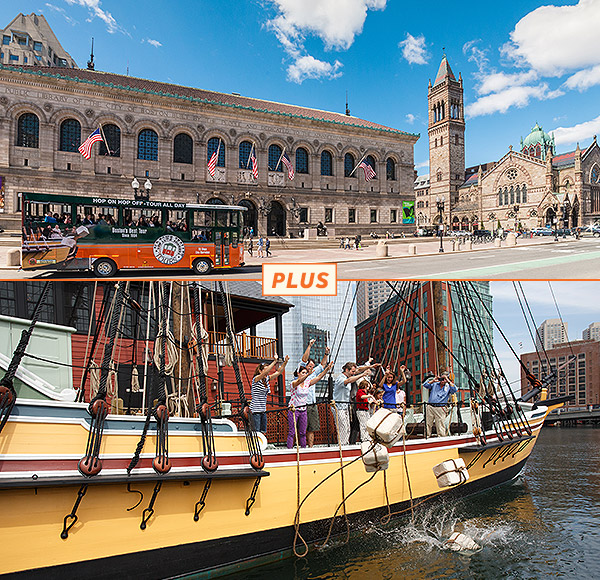
Boston Tea Party Ships & Museum + Old Town Trolley Tour Package
☆☆☆☆☆
★★★★★

9978 reviews

Boston Tea Party Ships & Museum
4.6

  • Admission to Boston Tea Party Ships & Museum:
  • Reservations are required
  • Visit authentically restored tea ships
  • Dump tea overboard just as the sons of liberty did
  • Old Town Trolley Tours:
  • Hop On, Hop Off at 17 Stops Around Boston and the Freedom Trail
  • Fully Narrated Tour
  • Real-Time Trolley Tracking Map
  • Best Views With Stadium Seating
  • Cushioned Seating
  • Stories Narrated by Local Experts
  • Smart-Sync Historical Visuals
  • Tallest Vehicles Allowed by Law
  • 100+ Points of Interest
  • American Owned and Operated
  • All-Weather Vehicles
  • Start at Any Designated Stop
  • “One of the 10 best hop-on hop-off tours in the world” - Forbes
  • PLUS:
  • $10 off Historic Harbor Cruise*
  • $10 off Ghosts & Gravestones Tour*
  • $5 off Boston Essential Guide*
  • 50% off admission at The Sports Museum*
  • $4.00 off admission at The West End Museum*
  • Please see your Old Town Trolley Tours conductor or sales representative to ask about attraction discounts that come with your trolley ticket.
  • Attraction tickets do not have to be used on the same day
Save up
to
15%
SEE THE BEST OF BOSTON IN ONE DAY
1-Day Old Town Trolley Tour
☆☆☆☆☆
★★★★★

1903 reviews

Old Town Trolley Tours of Boston
4.4

  • Hop On, Hop Off at 17 Stops Around Boston and the Freedom Trail
  • Fully Narrated Tour
  • Real-Time Trolley Tracking Map
  • Best Views With Stadium Seating
  • Cushioned Seating
  • Stories Narrated by Local Experts
  • Smart-Sync Historical Visuals
  • Tallest Vehicles Allowed by Law
  • 100+ Points of Interest
  • American Owned and Operated
  • All-Weather Vehicles
  • Start at Any Designated Stop
  • “One of the 10 best hop-on hop-off tours in the world” - Forbes
  • PLUS:
  • $10 off Historic Harbor Cruise*
  • $10 off Ghosts & Gravestones Tour*
  • $5 off Boston Essential Guide*
  • $6 off admission to Boston Tea Party Ships & Museum*
  • 50% off admission at The Sports Museum*
  • $4.00 off admission at The West End Museum*
  • Please see your Old Town Trolley Tours conductor or sales representative to ask about attraction discounts that come with your trolley ticket.
  • Attraction tickets do not have to be used on the same day
Prev
Next

St. Patrick's Day and Evacuation Day Schedule of Events

The city hosts multiple commemorative events across historic neighborhoods during this holiday weekend:

  • Charitable Irish Society Commemoration (Morning): Ceremonies take place near Tremont Street and historic downtown landmarks honoring early Irish contributions to the city.
  • Dorchester Heights Evacuation Day Ceremony (Midmorning): A public gathering at the Dorchester Heights Monument in South Boston commemorates George Washington’s tactical victory over British forces.
  • Boston Tea Party Ships & Museum Tours (Daily, 10 a.m. – 5 p.m.): Located at 306 Congress Street along Fort Point Channel, offering interactive reenactments, vessel exploration, and hands-on tea dumping.
  • South Boston St. Patrick’s Day Parade (Sunday of St. Patrick’s weekend, 1 p.m.): The famous procession steps off near the Broadway MBTA Station and marches through the neighborhood toward Andrew Square.
  • Irish Tea and Historic Tastings (Daily): Abigail’s Tea Room® serves hot teas, cold beverages, and Colonial pastries overlooking the water throughout operating hours.

Boston Tea Party Ships & Museum (Daily, 10 a.m. – 5 p.m.)
Experience live reenactments, interactive exhibits, and full-scale replica 18th-century tea ships. Grab your Boston Tea Party Museum tickets to secure your preferred tour time.

Abigail’s Tea Room (Daily)
Relax with a Colonial-inspired tea service overlooking Fort Point Channel during Boston Marathon weekend.

And more below.

Make it a Full Day of Rebel Spirit on the Waterfront

After the Parade, Storm the Ships!

Once you have soaked up the atmosphere at the parade, take a short stroll to 306 Congress Street on Fort Point Channel. At the Boston Tea Party Ships & Museum, you live history directly through immersive exhibits.

Step inside a Colonial town meeting house where costumed actors playing 18th-century patriots debate British tyranny. March down to Griffin’s Wharf, storm aboard full-scale replicas of 18th-century sailing vessels, and heave a chest of British tea into the water, shouting “Huzzah!” alongside fellow patriots. Explore rare artifacts, including the Robinson Tea Chest, which stands as the only known surviving tea chest from December 16, 1773, and experience state-of-the-art 3D holographic exhibits.

Reserve Museum Tickets — from $36

The Historical Connection: Irish Patriots and Evacuation Day (1776)

March 17th became a dual holiday in Boston because of a Revolutionary War secret code. On March 17, 1776, General George Washington’s troops fortified Dorchester Heights using 59 heavy cannons captured from Fort Ticonderoga by Colonel Henry Knox, a Bostonian of Irish descent. Outmaneuvered by this tactical placement, over 11,000 British troops and loyalists evacuated the city by sea. To ensure military security on that historic day, Washington designated the official military password to enter American positions as “Boston” and the countersign as “Saint Patrick.”

Irish immigrants in Boston played a vital role in the events leading up to the Revolution. Colonial Boston maintained a thriving Irish community, dating back to the establishment of the Charitable Irish Society on March 17, 1737. Patrick Carr, an Irish immigrant, became one of the five martyrs killed at the Boston Massacre in 1770. Many men of Irish descent subsequently stood against British rule, proving that the fight for liberty has deep green roots in Boston soil.

Plan Your Visit / Getting There

Location and Operating Hours

Address: Boston Tea Party Ships & Museum, 306 Congress Street, Boston, MA, 02210 (located on the Congress Street Bridge over Fort Point Channel)
Hours: Open daily, 10 a.m. – 5 p.m. Tours depart every 15 minutes.

Getting Here on St. Patrick’s Weekend

MBTA Subway (Recommended): Ride the Red Line to South Station or the Silver Line to Courthouse Station. Both stops sit less than a five-minute walk from the museum doors.
Walking: Guests can easily walk to the museum from the Financial District, Downtown Crossing, and the Seaport District.
Parking: Discounted parking validation is available at the Farnsworth Street Garage (17 Farnsworth Street) and Atlantic Wharf Garage (280 Congress Street). Due to St. Patrick’s Day Parade road closures in South Boston, public transportation is strongly encouraged.
Pro Tip: St. Patrick’s Day weekend is one of the busiest spring travel periods in Boston. Timed-entry slots fill rapidly, so reserve your tickets online in advance to guarantee your preferred time.

FAQs

March 17th is a dual celebration in Boston honoring both St. Patrick’s Day and Evacuation Day. On March 17, 1776, General George Washington fortified Dorchester Heights with heavy artillery captured by Colonel Henry Knox, forcing British troops to evacuate Boston Harbor in the Continental Army’s first major victory. To secure military positions that day, Washington designated “Saint Patrick” as the official countersign.

The parade takes place on the Sunday of St. Patrick’s Day weekend, stepping off at 1 p.m. near the Broadway MBTA Station. The route marches through South Boston before concluding near Andrew Square.

Irish immigrants played a vital role in early American liberty. Boston hosted the first recorded Colonial St. Patrick’s Day celebration in 1737 through the Charitable Irish Society. Early Irish Bostonians stood up against British rule, including Patrick Carr, an Irish immigrant who became one of the five martyrs slain in the 1770 Boston Massacre.

After enjoying the parade, take a short walk to Griffin’s Wharf to experience an interactive journey back to 1773. Guided by costumed historical interpreters, you can participate in a Colonial town meeting, board full-scale replicas of 18th-century sailing vessels, throw tea into Boston Harbor, view the historic 1773 Robinson Tea Chest, and relax at Abigail’s Tea Room.

Public transportation is strongly recommended due to heavy holiday traffic and parade road closures in South Boston. Taking the MBTA Red Line to South Station or the Silver Line to Courthouse Station drops guests off less than a five-minute walk from Fort Point Channel and waterfront attractions.

Yes, advance online reservations are strongly encouraged. St. Patrick’s Day weekend is one of the busiest spring travel periods in the city, and timed-entry tour slots fill quickly. General admission tickets start at $36, and combination packages featuring the Old Town Trolley Tours® start at $78.95.

Yes, Abigail’s Tea Room is open daily during regular operating hours from 10 a.m. to 5 p.m. Guests can sample hot and cold teas chosen for their resemblance to Colonial-era blends, enjoy craft beers and wine, and savor freshly baked scones and pastries with waterfront views of Boston Harbor.

Celebrate Freedom and Heritage Where Revolution Began

Don’t just watch the parade, become part of Boston’s legendary history. Step aboard full-scale 18th-century sailing vessels, raise your voice for liberty, and make this St. Patrick’s Day weekend unforgettable.

★★★★★ 4.6 Out of 5 Stars — Over 9,400 Verified Guest Reviews

Revolutionary Boston and the Irish Legacy

The Growth of Irish Heritage in Colonial Boston

Long before the modern parades in South Boston, the Irish presence shaped the development of Colonial Massachusetts. Immigrants arriving from Ireland during the 17th and 18th centuries contributed significantly to the maritime economy, trade crafts, and labor force of the port city.

On March 17, 1737, a group of prominent Irish merchants and gentlemen gathered in downtown Boston to found the Charitable Irish Society. This organization provided assistance to needy compatriots, fostered community unity, and organized the first recorded St. Patrick’s Day observance in the American colonies. This charitable foundation demonstrated the civic engagement of early Irish residents as they integrated into the social structure of Colonial New England.

Tensions Escalating on the Streets

As the British Parliament introduced punitive tax measures during the 1760s, Boston became a hotbed of political agitation. Residents across various demographic backgrounds found common cause in opposing taxation without representation.

Tensions boiled over on the night of March 5, 1770, outside the Custom House on King Street. A confrontation between local citizens and British sentries led to gunfire, resulting in the deaths of five men in what became known as the Boston Massacre. Among those slain was Patrick Carr, an Irish leather worker who had emigrated to Boston. Carr’s sacrifice highlighted the involvement of Irish residents in the rising resistance against British military occupation.

December 16, 1773: The Spark at Griffin’s Wharf

Opposition to royal authority reached its climax three years later over the arrival of East India Company tea. The passage of the Tea Act in 1773 allowed the company to sell taxed tea directly to the colonies, undercutting local merchants and asserting Parliamentary authority over Colonial commerce.

When three tea ships, the Dartmouth, the Eleanor, and the Beaver, docked at Griffin’s Wharf, local citizens demanded their return to England without paying import duties. Following an impasse at the Old South Meeting House on the evening of December 16, 1773, a group known as the Sons of Liberty marched to the waterfront. Disguised as Mohawk warriors, they boarded the vessels, smashed open 342 chests of tea, and dumped over 92,000 pounds of tea into Boston Harbor. This act of civil disobedience galvanized opposition across all 13 colonies and set the stage for open armed conflict.

Evacuation Day 1776: Washington's First Major Victory

The Siege of Boston

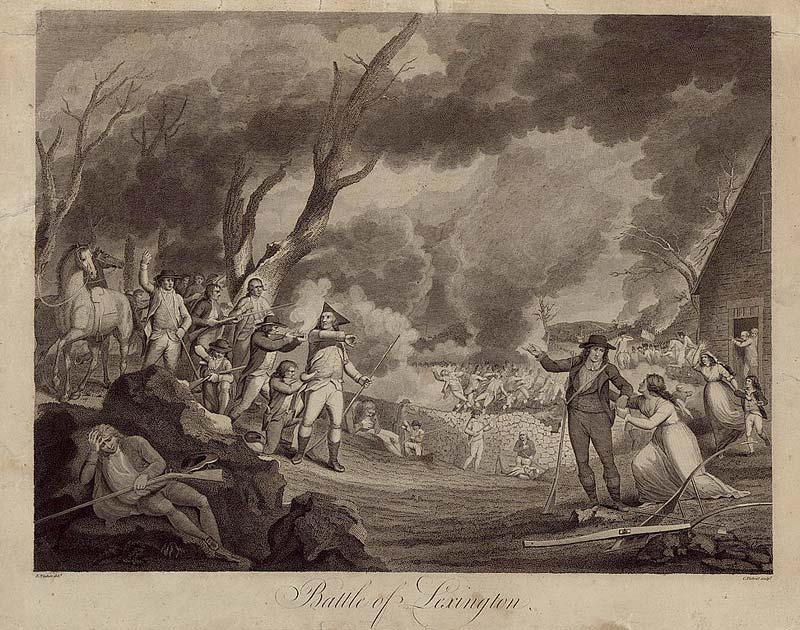
Following the opening battles of Lexington and Concord in April 1775, Colonial militia forces surrounded British-occupied Boston. When General George Washington arrived in Cambridge in July 1775 to take command of the newly formed Continental Army, he faced a difficult military situation. British forces held fortified positions inside the city, protected by Royal Navy warships anchored in the harbor.

The siege dragged through the winter of 1775-1776, with the Continental Army lacking the heavy artillery required to dislodge British troops. Washington needed a decisive strategic move to break the stalemate and liberate the city.

Henry Knox and the Noble Train of Artillery

The turning point came through the efforts of Colonel Henry Knox, a 25-year-old Boston bookseller of Irish descent. Knox proposed a daring expedition to transport heavy artillery captured from Fort Ticonderoga in upstate New York all the way to the siege lines outside Boston.

Over three grueling winter months, Knox led a detachment that hauled 59 cannons and mortars weighing a total of 60 tons across frozen rivers, snow-covered mountains, and rugged terrain. This incredible logistical effort, known as the “Noble Train of Artillery,” arrived at Washington’s camp in early 1776, providing the commander in chief with the firepower needed to challenge British control.

Fortifying Dorchester Heights

On the night of March 4, 1776, Continental troops executed a secret military operation under cover of darkness and heavy bombardment. Soldiers marched onto Dorchester Heights, a high ground commanding strategic views of both Boston and its harbor. Working through the night, they constructed prefabricated fortifications and mounted Knox’s heavy cannons atop the hills.

When British Commander General William Howe awoke on the morning of March 5th, he looked up at the Heights and reportedly remarked that the Americans had done more work in one night than his whole army could have done in months. The strategic placement of artillery rendered the British fleet in the harbor vulnerable to destruction.

March 17, 1776: The Evacuation

Recognizing that his position was untenable, General Howe ordered the complete evacuation of British land forces and Royal Navy ships. On March 17, 1776, over 11,000 British soldiers, along with hundreds of loyalist residents, boarded more than 120 ships and sailed away from Boston Harbor toward Halifax, Nova Scotia.

The departure marked the end of an eight-year British military occupation of Boston. Washington’s successful campaign secured his first victory as commander and liberated the city without a costly, bloody assault on its downtown streets.

The Origin of the Military Password

To maintain operational security and prevent Loyalist infiltration during the critical days surrounding the evacuation, Washington established daily passwords and countersigns for his troops guarding American positions.

For March 17, 1776, Washington selected “Boston” as the primary password and “Saint Patrick” as the countersign. This deliberate choice honored both the city being liberated and the heritage of the many Irish-American soldiers serving within the ranks of the Continental Army. Today, the dual observance of St. Patrick’s Day and Evacuation Day in Suffolk County preserves the memory of that strategic triumph.
Additional City sightseeing and Visitor Insights

Navigating the Historic Waterfront

Visiting the Boston Tea Party Ships & Museum during St. Patrick’s Day Boston 2027 offers guests an opportunity to explore the maritime history of Fort Point Channel and the waterfront district. Paved walking routes along the Boston Harborwalk connect the museum directly to neighboring commercial, dining, and cultural zones.

  • Seaport District: A short walk across the Congress Street Bridge brings visitors to the Seaport, featuring contemporary dining options, open-air parks, and waterside walkways.
  • Financial District and Downtown Crossing: Located across the channel to the west, these historic business corridors feature classic architecture, shopping plazas, and Freedom Trail® connections.
  • South Boston Waterfront: Situated near the parade grounds, this area offers access to maritime parks, historic docks, and harbor viewpoints.

Dining Experiences at Abigail’s Tea Room

Located inside the museum building overlooking Fort Point Channel, Abigail’s Tea Room provides a comfortable indoor resting spot during your day of sightseeing. The cafe is named in honor of Abigail Adams, the influential founding mother, advocate, and wife of John Adams.

Visitors can enjoy a selection of hot and cold teas selected to match the flavor profiles of the historic teas thrown into the harbor in 1773. The menu includes local craft beer, wine, warm New England clam chowder, hearty soups, fresh sandwiches, and fresh Colonial-style pastries. Abigail’s Tea Room is accessible to both museum tour guests and the general public during regular operating hours.

Combining Tour Options With Old Town Trolley Tours

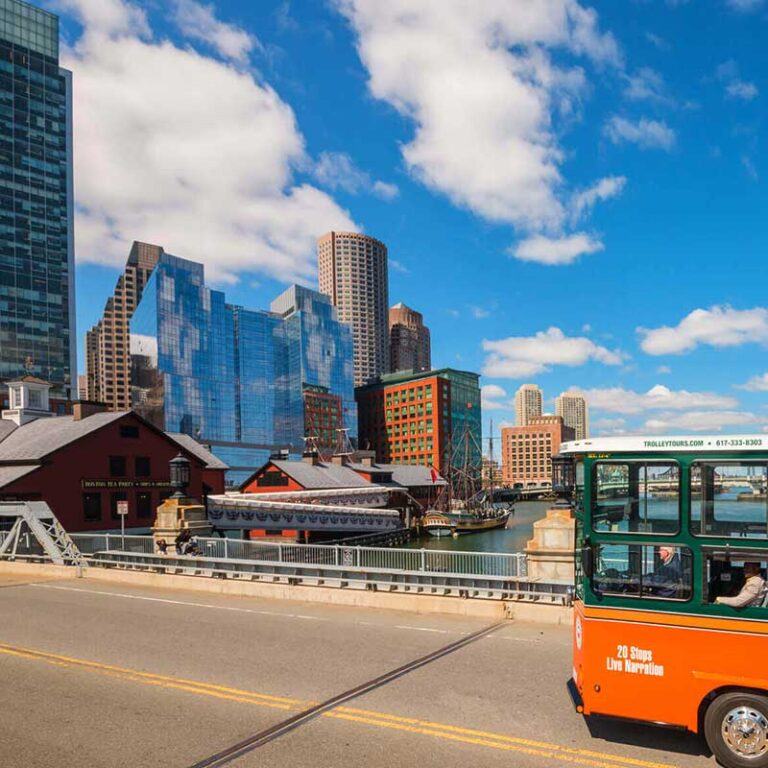
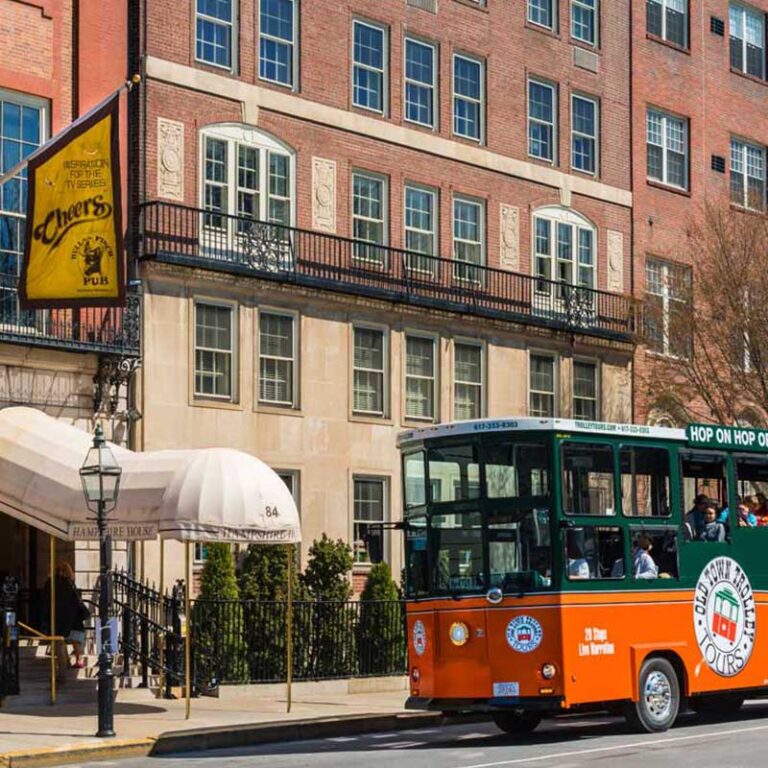
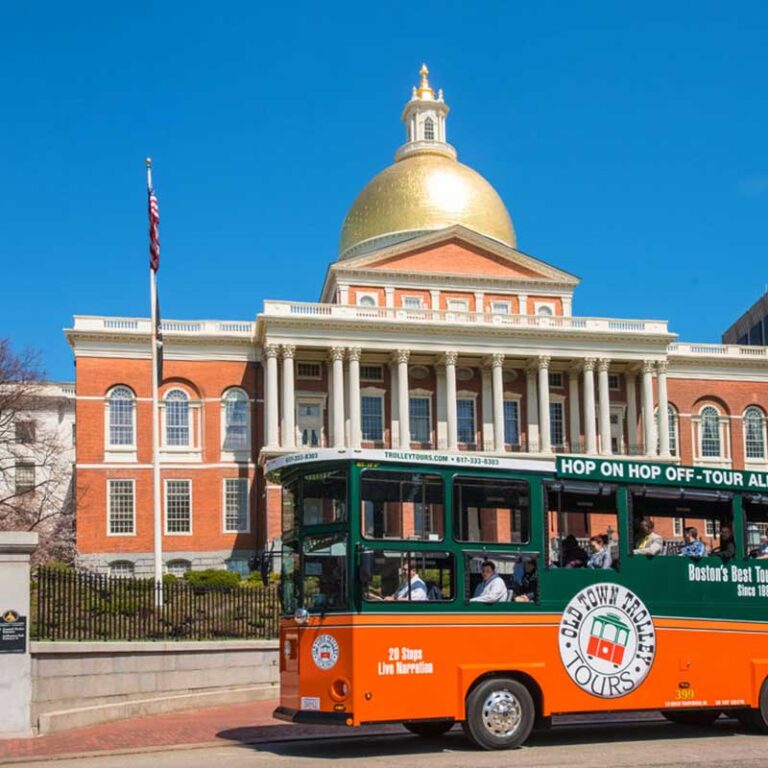
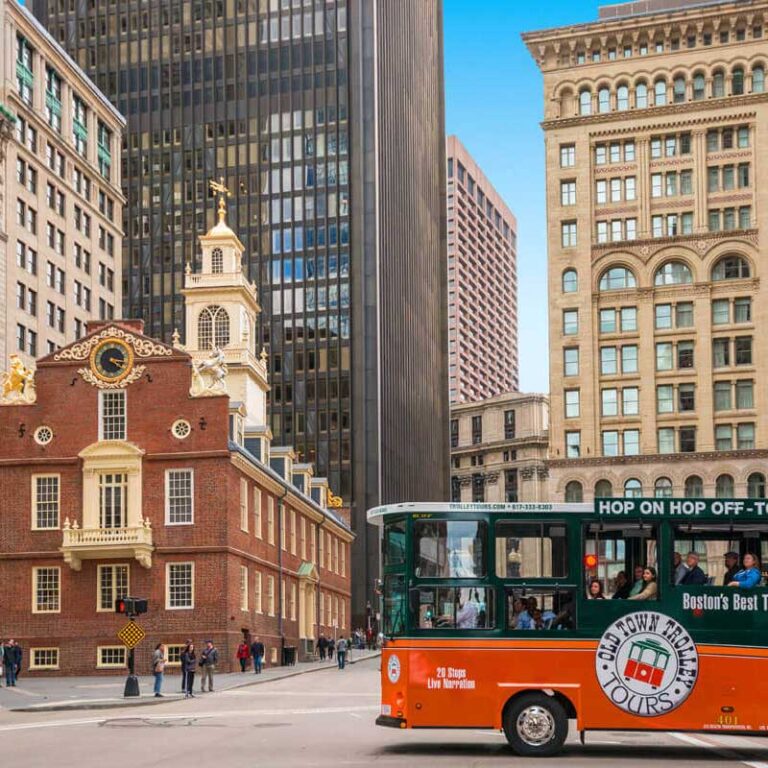
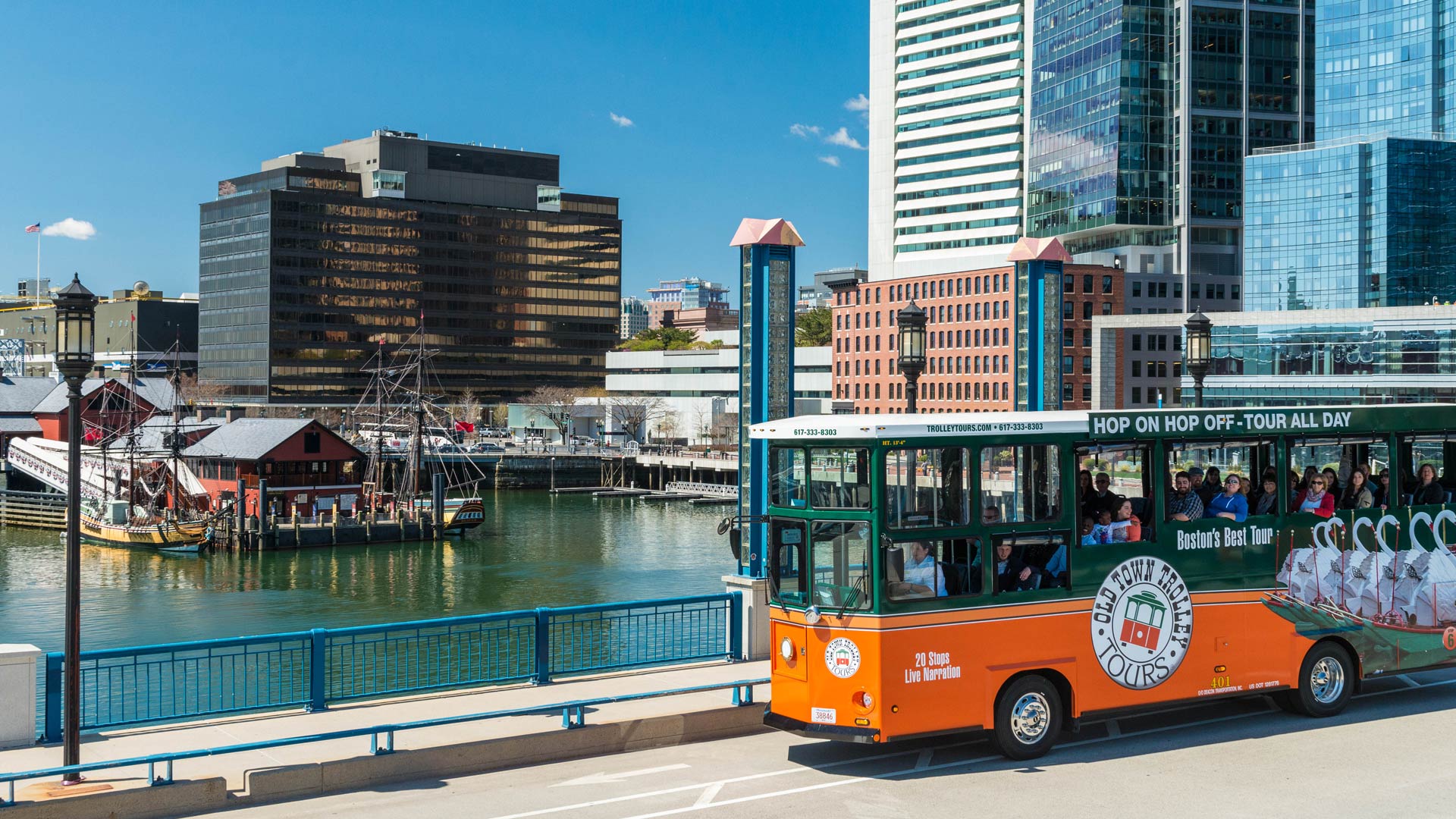
Exploring Boston during a major holiday weekend is convenient when using open-air trolley transportation. Old Town Trolley Tours operates a hop-on, hop-off route covering 17 historic stops across the city.

Guests holding combination tickets can ride the trolley to major sights like the North End, Beacon Hill, Boston Common, and Copley Square, dropping off at Stop 14 right outside the Boston Tea Party Ships & Museum. This option eliminates the hassle of finding parking amid holiday road closures, allowing families to enjoy their sightseeing itinerary at their own pace.

Make your travel plans today to experience the history, courage, and celebration of St. Patrick’s Day Boston 2027 on the historic waterfront!

SIGNUP FOR SPECIALS & DISCOUNTS

Sign up to receive special offers, discounts and news on upcoming events.